
Prerequisite: Configure MCP in your IDE before following these workflows.
Your First Auto-Fix
1
Fetch unaddressed comments
Ask your AI assistant:The assistant calls 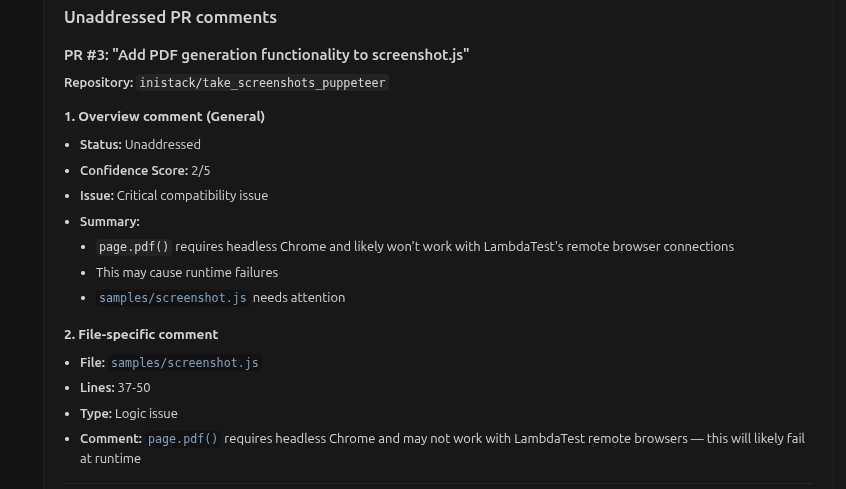
list_merge_request_comments with addressed: false.2
Review the response
You’ll see comments with their details including file path, issue type, and whether a fix is available.
3
Apply fixes
For comments with The assistant applies the 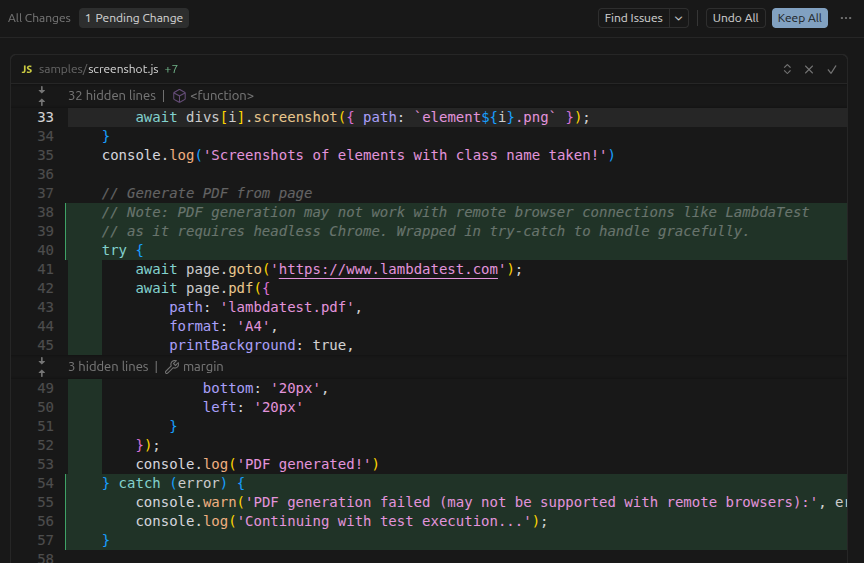
hasSuggestion: true:suggestedCode to your file.4
Accept changes
Review the changes, then click Keep All to apply them to your codebase.
5
Commit changes
After applying fixes, commit your changes. Greptile automatically marks comments as addressed when the file is modified.
Understanding Comment Fields
When you fetch comments, each one includes these key fields:How Comments Get “Addressed”
A comment becomes addressed when there’s a commit after the comment that modifies the relevant file:reviewAnalysis.reviewCompleteness (e.g., “2/5 Greptile comments addressed”).
Common Prompts
Get all comments with fixes
Get all comments with fixes
hasSuggestion: true.Fix style issues only
Fix style issues only
Check if PR is ready to merge
Check if PR is ready to merge
get_merge_request and checks reviewAnalysis.reviewCompleteness.Get comments for specific file
Get comments for specific file
filePath.See what custom context triggered a comment
See what custom context triggered a comment
linkedMemory field for the associated custom context.Next Steps
Agent Skills
Automate the full auto-fix loop with
/check-pr and /greploopCustom Context
Learn how
linkedMemory connects comments to your patternsTools Reference
Complete field documentation for all responses